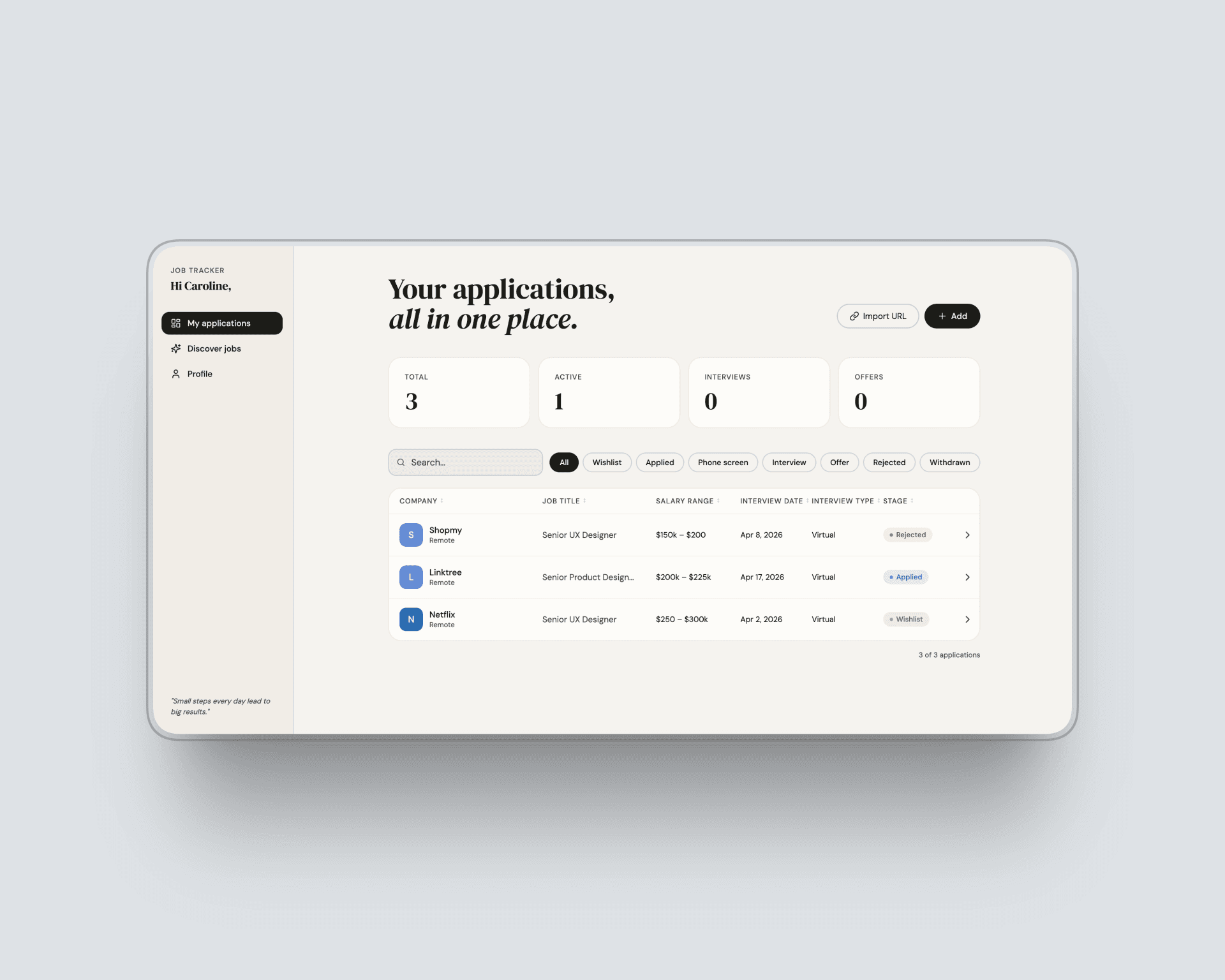
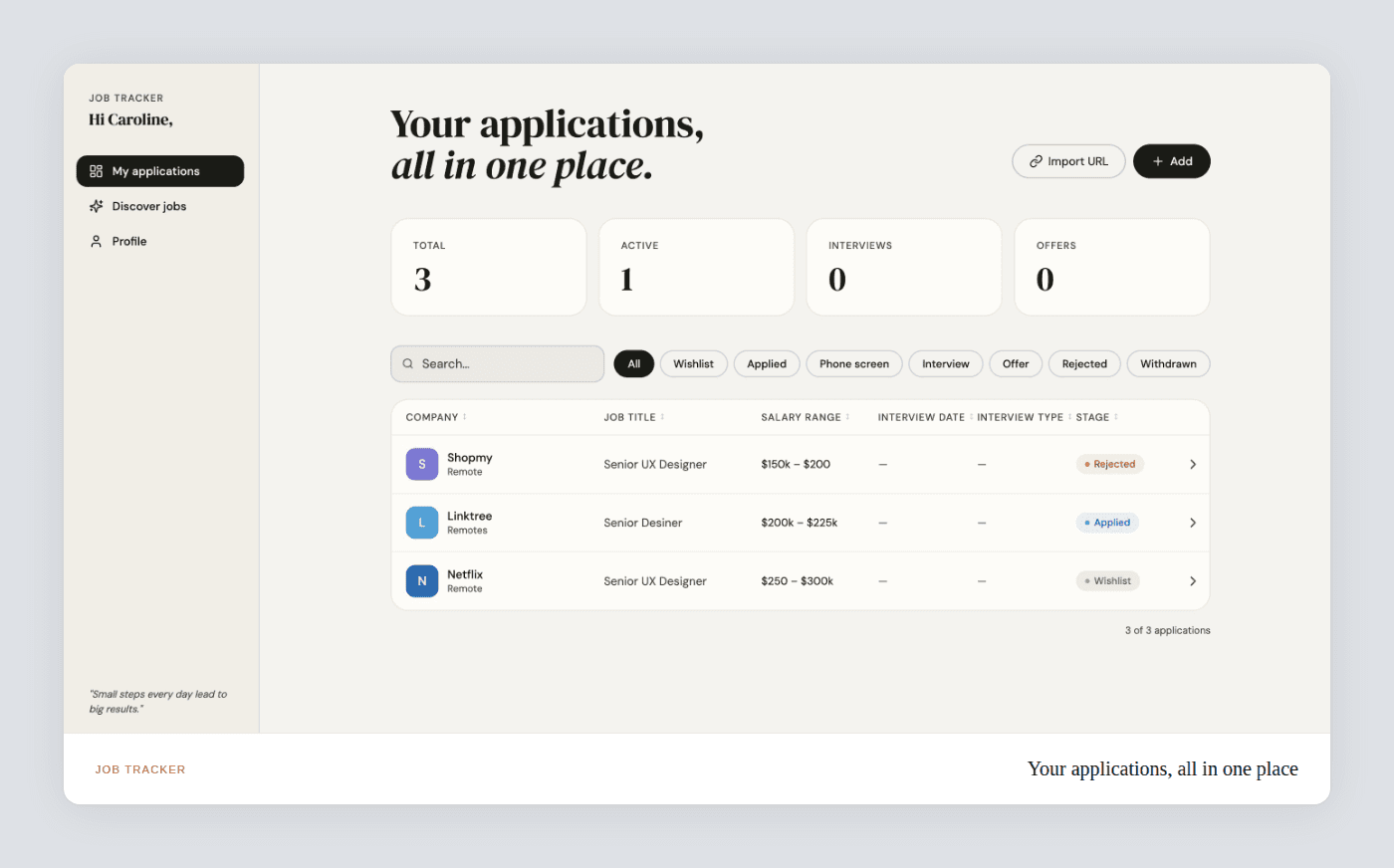
Built a web app from scratch to track applications, store resume versions, and keep email notes in one place that didn't look like a spreadsheet.
Client
Side project
Role
Designer and developer
Duration
2 days
Focus areas
Personal to public
Every job search tool is built around data, not the person doing the searching
Job searching is emotionally taxing. You’re tracking dozens of applications, managing your energy, and navigating rejection along the way. Most people default to a spreadsheet, functional, but cold. I wanted something more thoughtful, something I’d actually enjoy using.
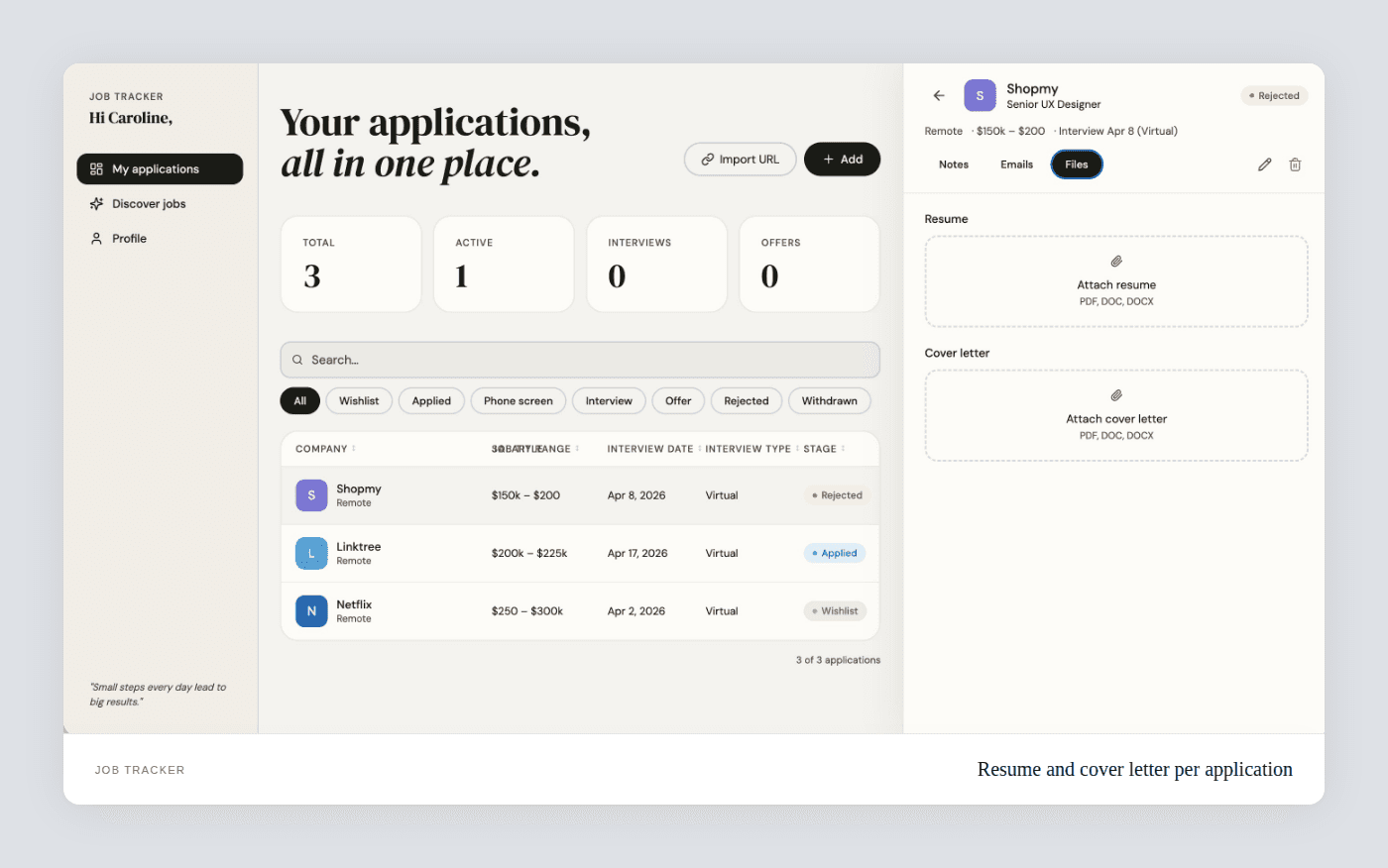
The bigger pain point for me was resume versioning. I was tailoring my resume for different types of roles and had no reliable way to know which version I'd sent to a specific company. If I got a callback, I couldn't easily revisit what I'd submitted. That gap felt solvable.
What spreadsheets got wrong
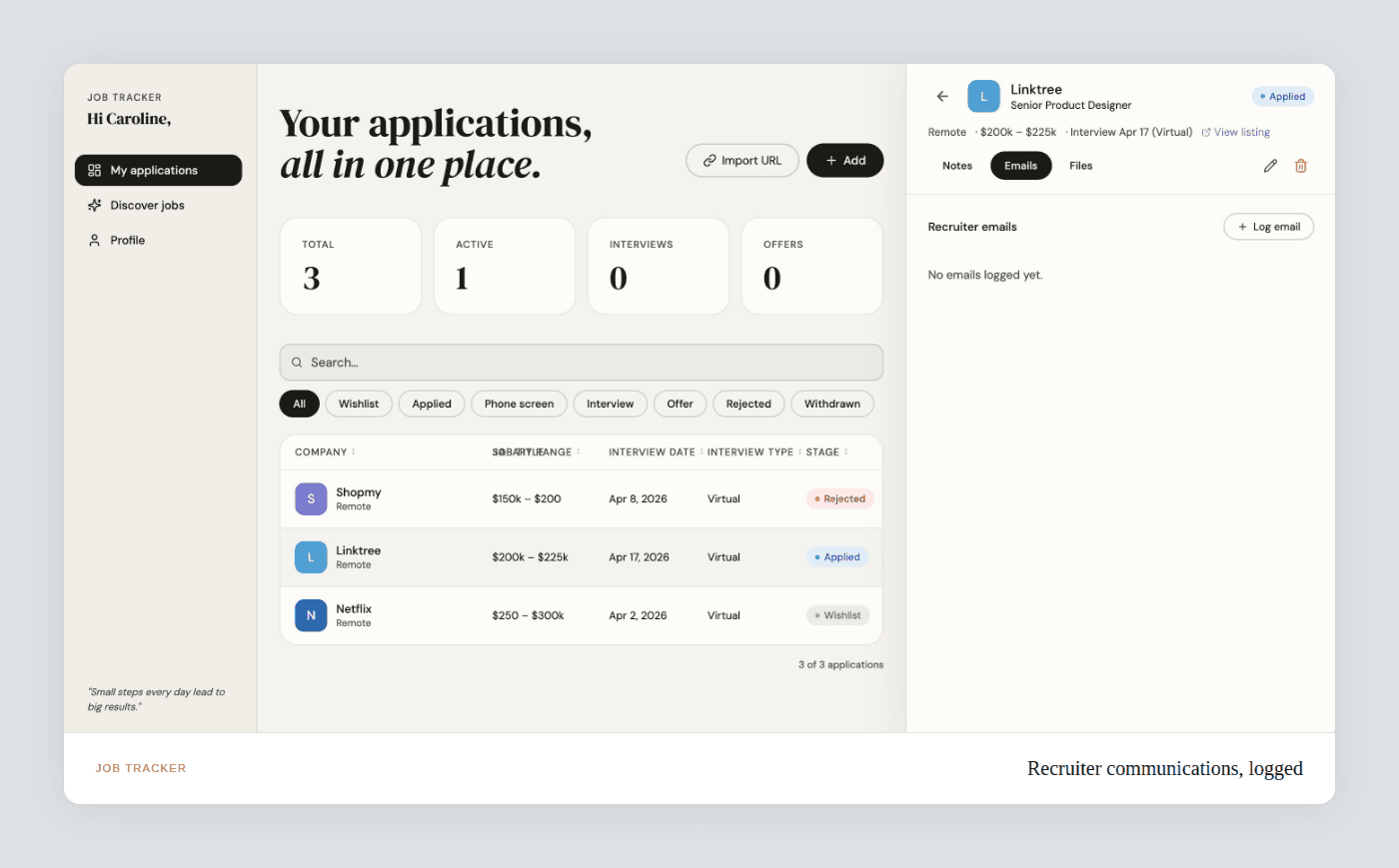
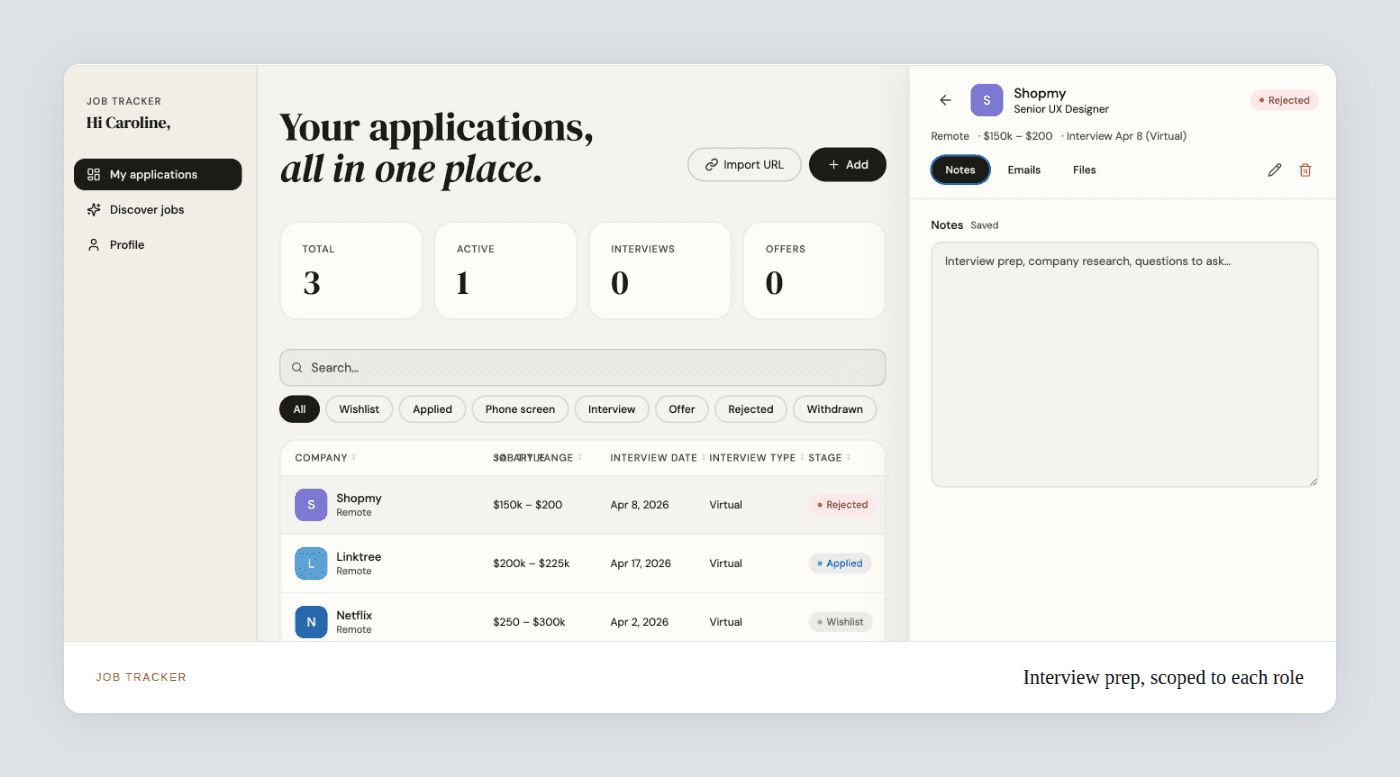
No context per application. No way to attach documents. Status updates were manual and easy to lose. The format treated job searching like inventory management.
What I wanted instead
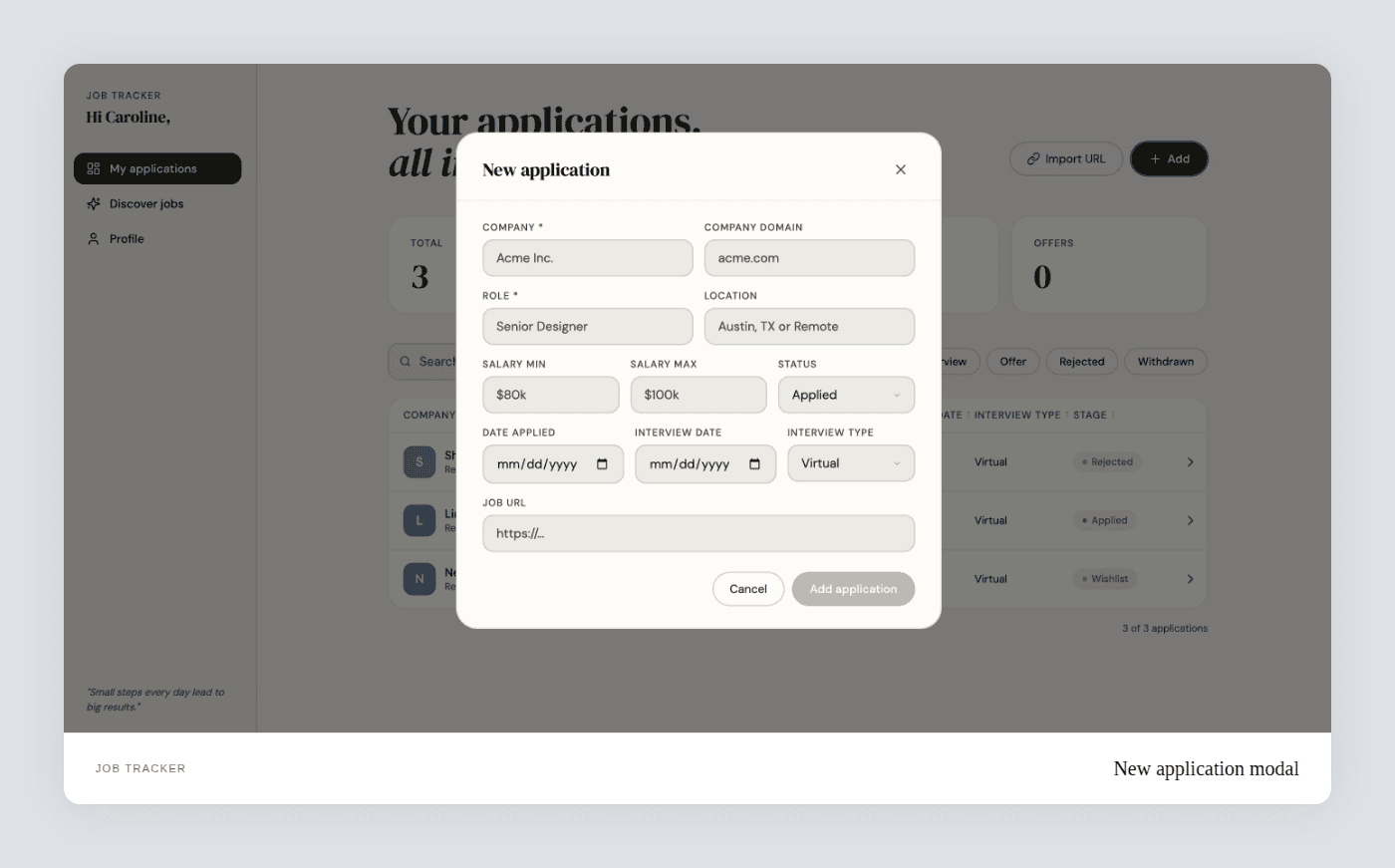
A single, calm workspace. Glanceable pipeline status. Per-application file storage so I'd always know exactly what I submitted and when.
Research, sketch, then build
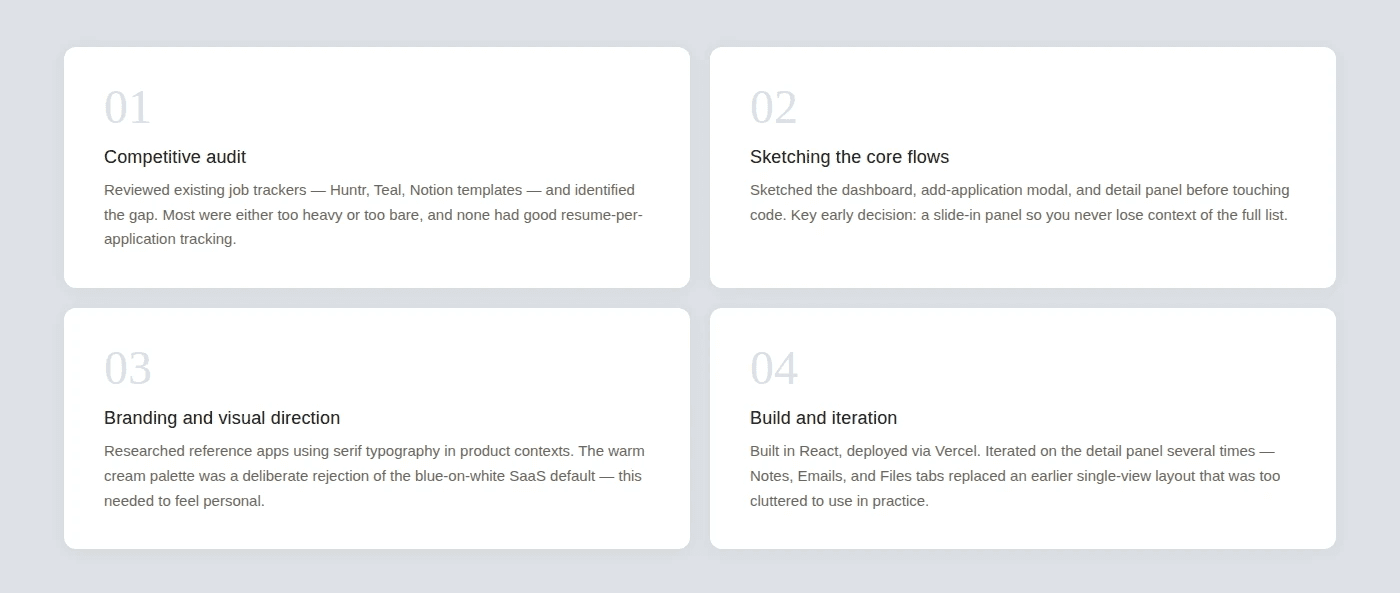
This was a side project, so the process was tighter than a work engagement — but I didn't skip the thinking. I did competitive research, sketched the core flows, and iterated on both the UI and the feature set before writing a line of code.
Job Tracker Features
From a personal tool to something bigger
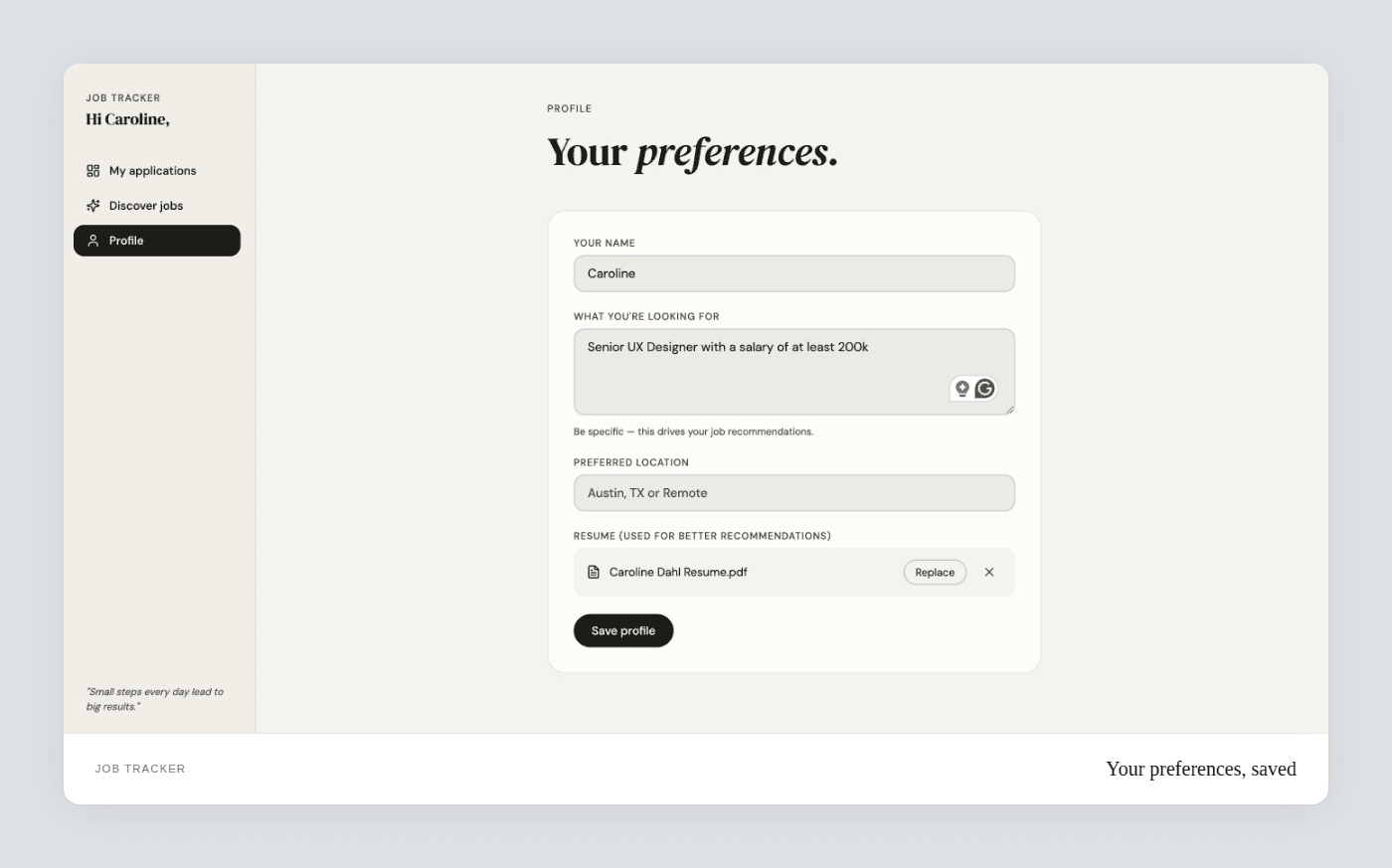
The Profile page already lays the groundwork. Users enter their name, preferred location, what they're looking for in their own words, and upload a base resume. That preference layer was built with the next phase in mind.
The next version would connect that profile to a job discovery feed, surfacing relevant listings based on role type, location, salary range, and company size, with direct links to apply. Instead of opening six tabs and running the same search every morning, you'd open the tracker and already have a curated shortlist waiting. I would like to spend more time on this project and get it out to real users so others can use it in their job search. Maybe even connect it with gmail so it can automatically track jobs as a user applies.
It keeps everything in one place across the full arc: discover, track, follow up. The tool grows with the user instead of only picking up once they've already applied.
What I learned building for myself
Designing something you use every day sharpens your instincts fast. I caught issues immediately because I felt them, not because I was reviewing a Figma file or watching a usability session. The feedback loop was immediate and unforgiving.
I also got sharper on full-stack ownership here. Handling both design and deployment meant there was no one to hand off friction to. Every rough edge was mine to fix.
I can't wait to build more products.