Dark mode redesign of Cox Automotive’s eCRM platform, informed by research and competitive pressure
Client
Cox Automotive
Role
Lead Product Designer
Duration
3 months
Focus areas
UX Research, UI Design
Background
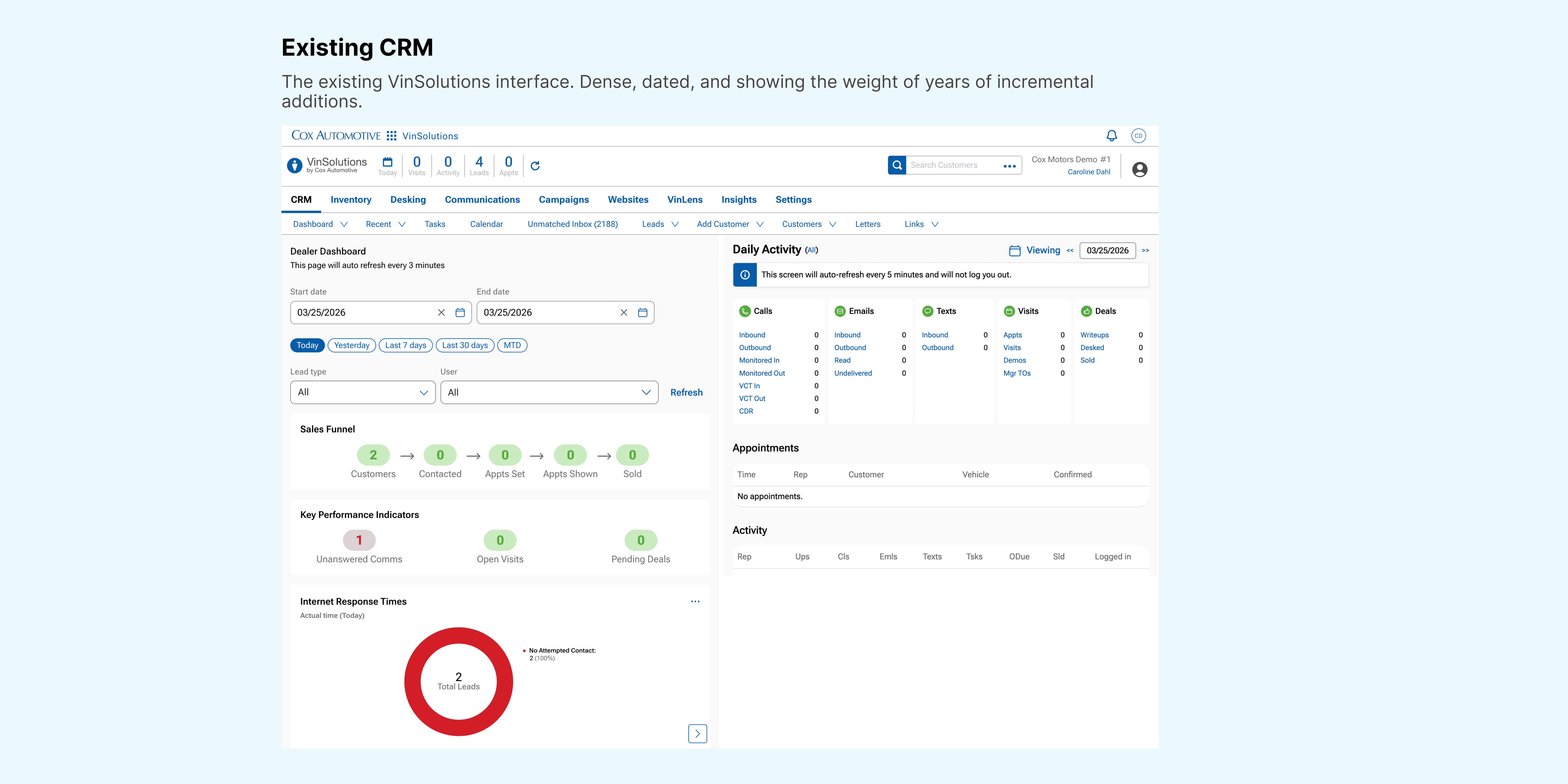
VinSolutions, Cox Automotive's dealer-facing CRM, had years of incremental updates behind it. The information architecture was functional but the UI hadn't been treated as a competitive asset. Then Drive Centric arrived with a modern interface, and dealerships started paying attention.
The feedback coming in wasn't just complaints about aesthetics. Dealers were evaluating whether to switch. That changed the conversation internally from "we should update the look" to "we need to move fast and prove we're better."
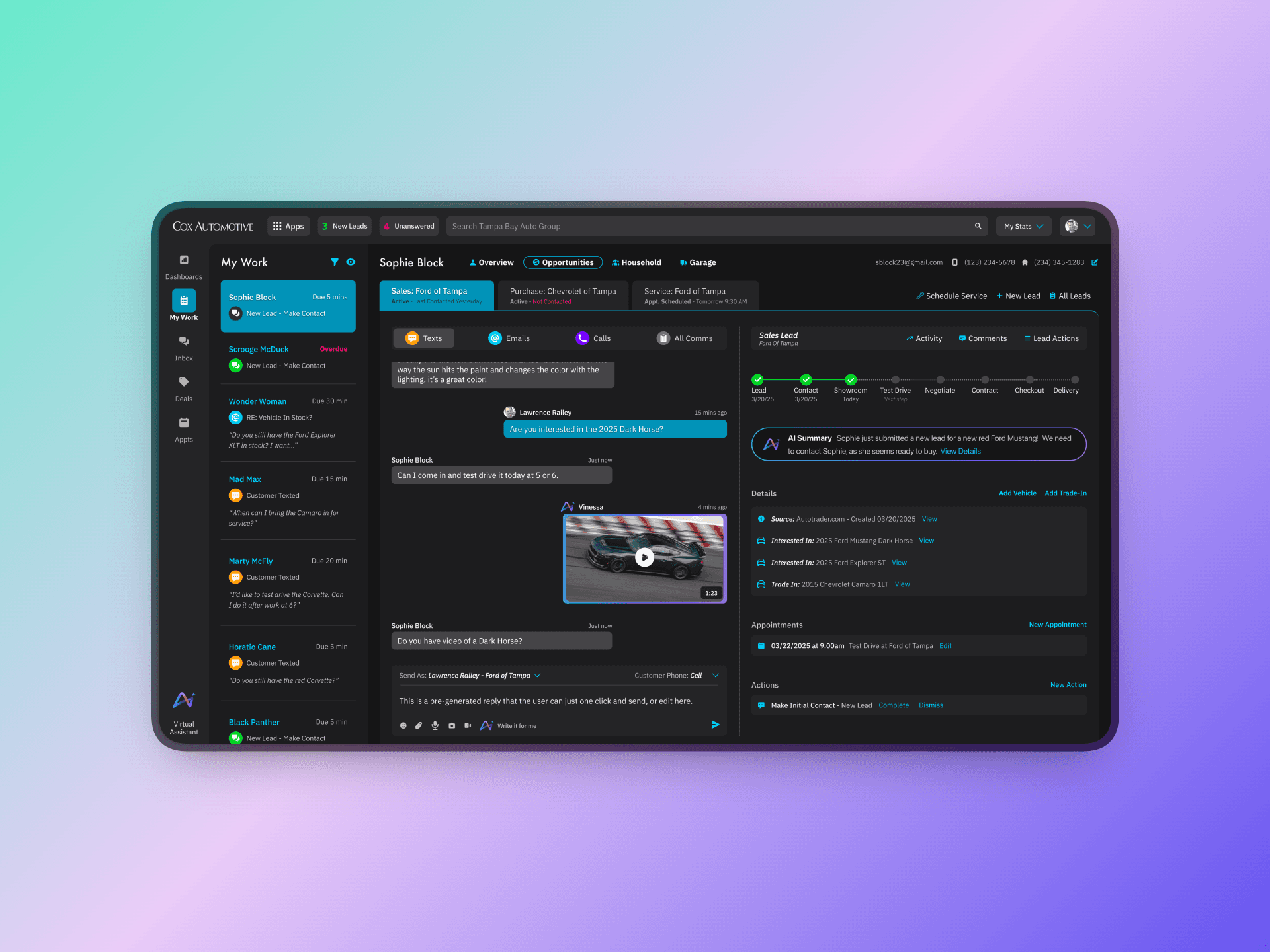
A cross-functional team of five designers was assembled to redesign the eCRM with a dark mode as the primary direction. The goal wasn't a reskin. It was a ground-up rebuild of the visual system, validated against the actual competitor in a controlled benchmark setting.
The Problem
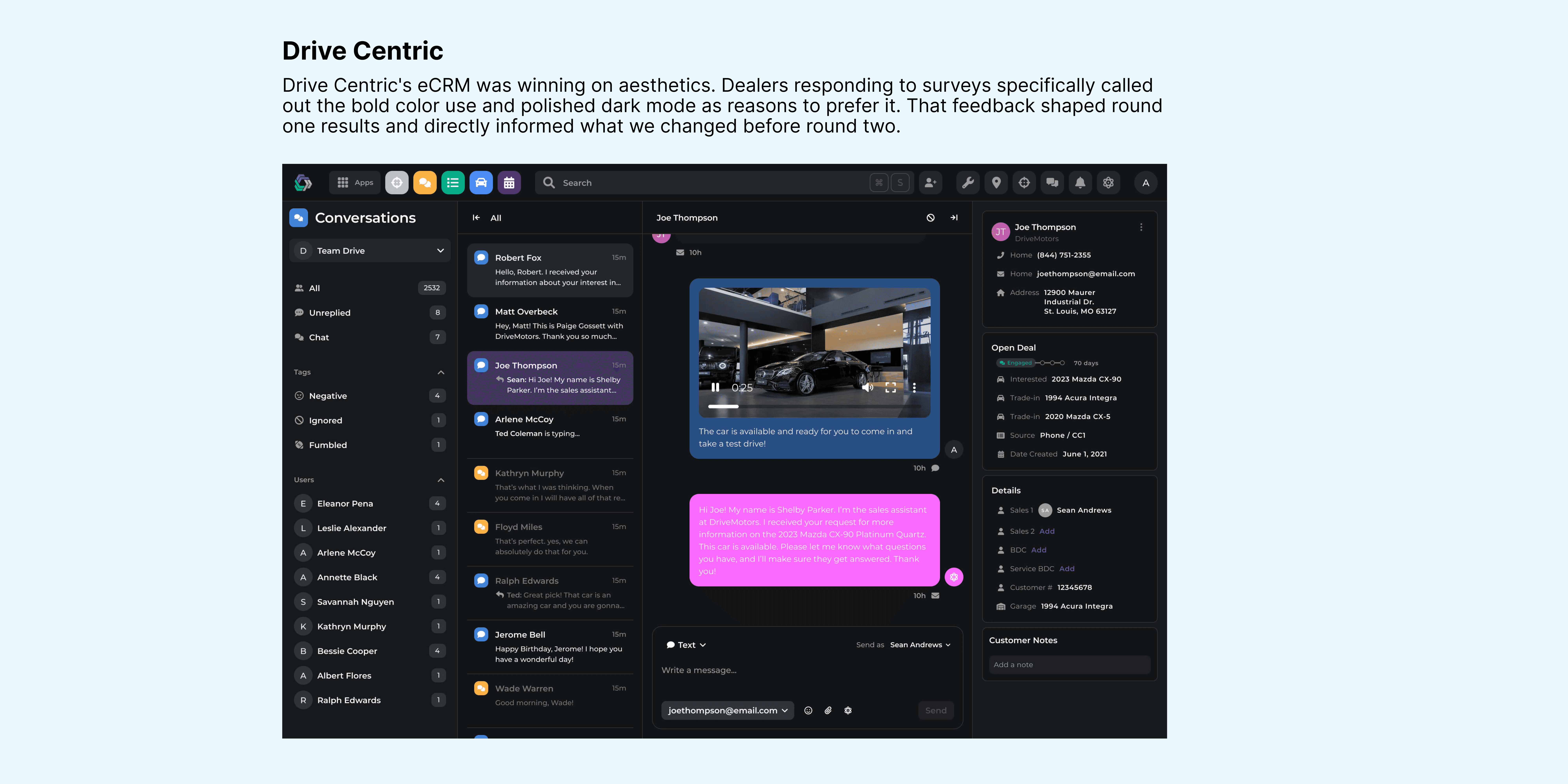
Cox Automotive's eCRM had a loyalty problem. After years of incremental updates, the platform was showing its age, and dealerships were noticing. Drive Centric, a newer competitor with a modern, polished interface, was actively positioning itself as the upgrade dealers deserved.
The threat was real. Dealers weren't just complaining about aesthetics , they were considering switching. For a platform used across thousands of dealerships nationwide, that was a business crisis, not a design request.
The project escalated quickly, reaching executive leadership including Steve Rowley. A dark mode redesign of the eCRM became the highest priority initiative on the product roadmap.
What I owned on the team
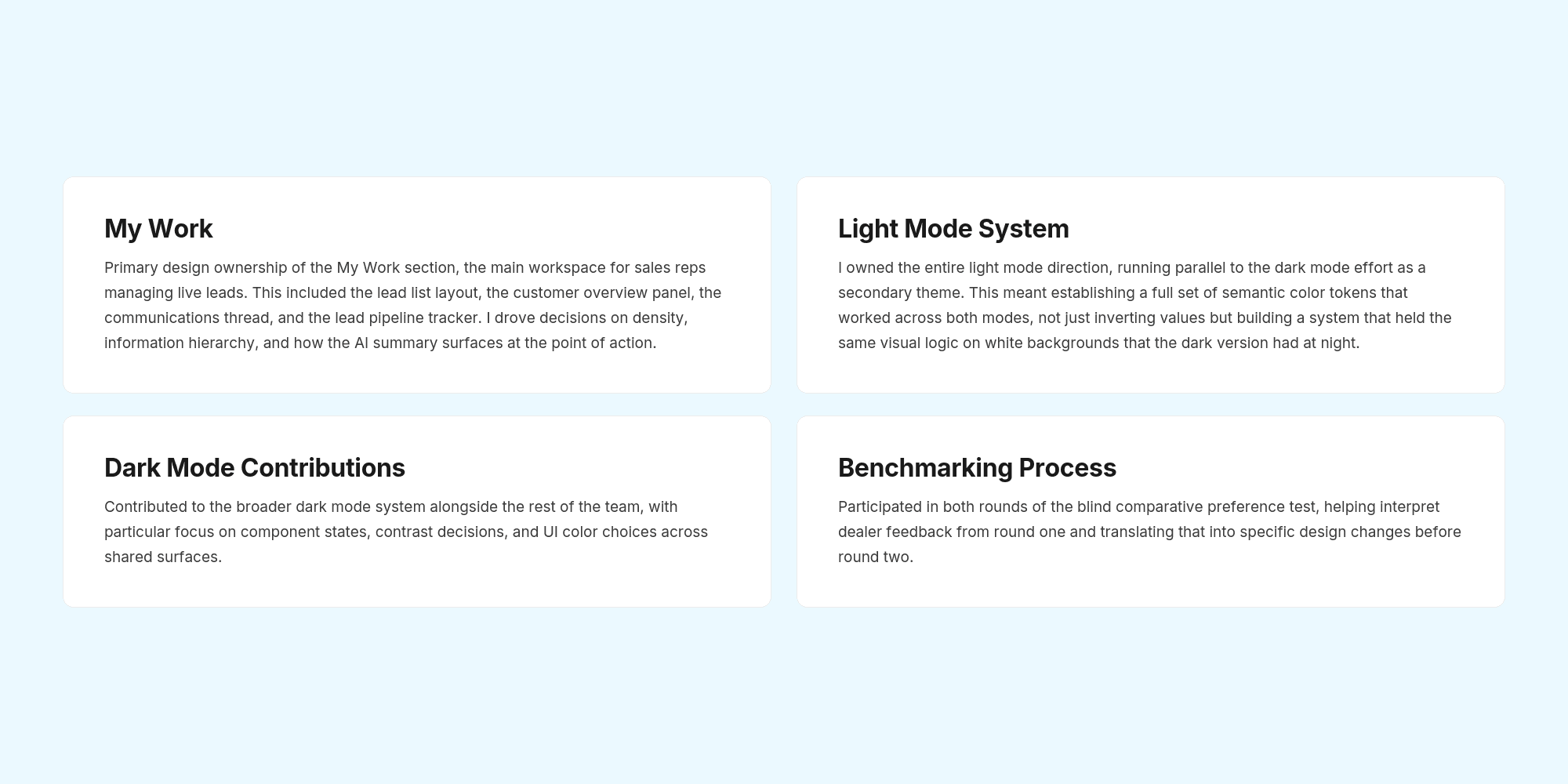
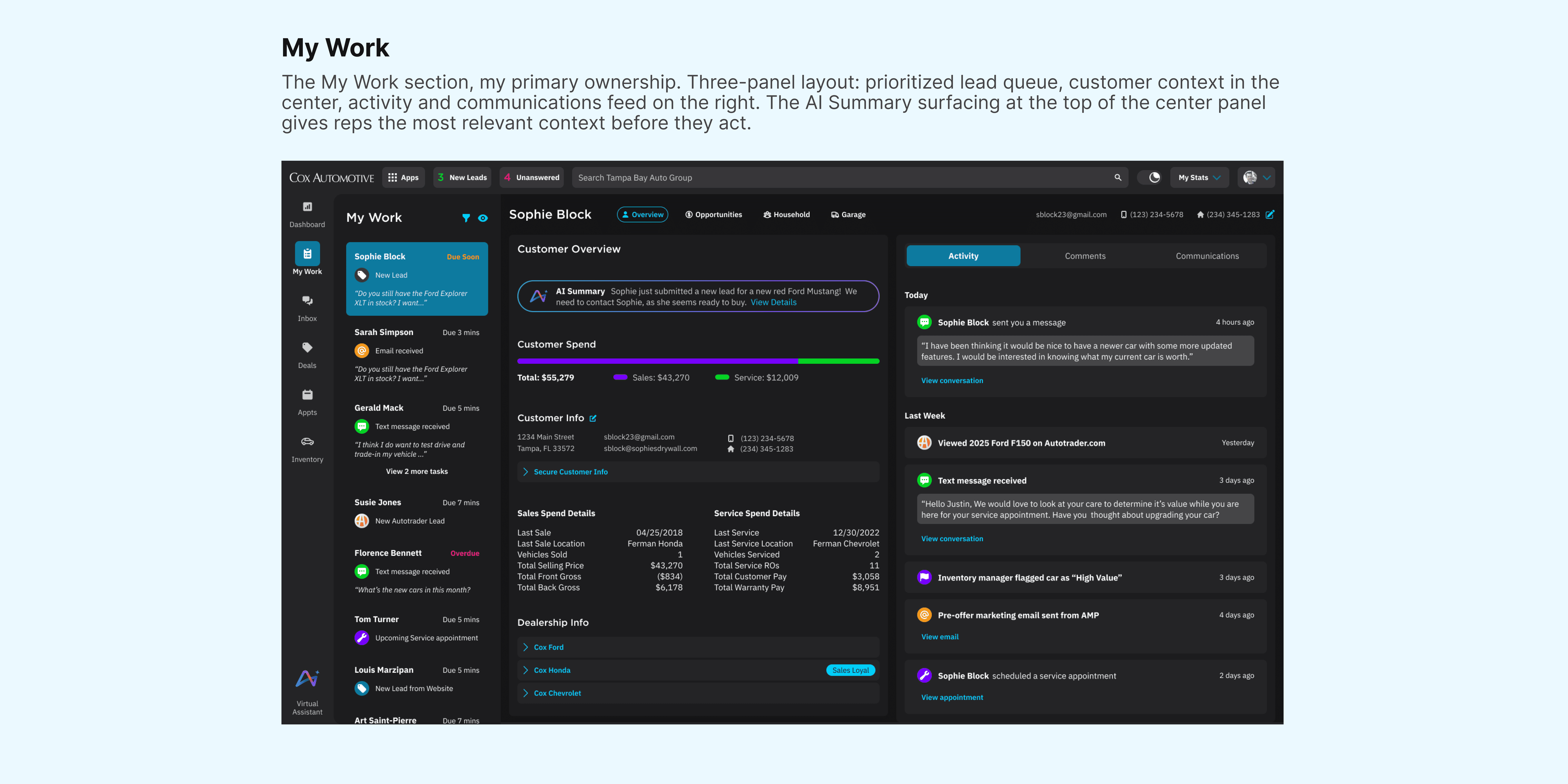
With five designers working in parallel, the work was divided by surface area. My two primary ownership areas were the My Work flow and the light mode system.
How we built and validated it
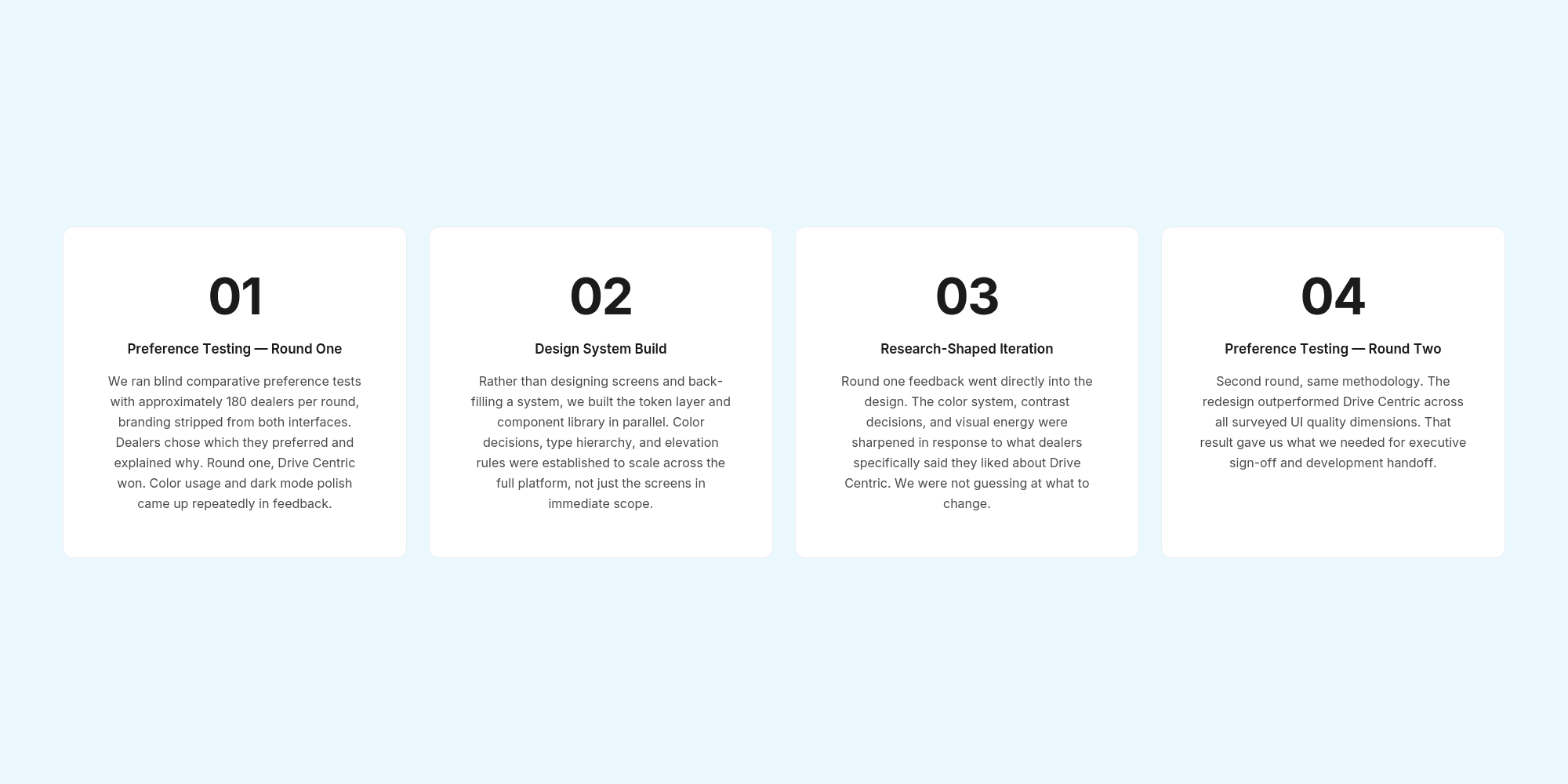
The project ran in parallel tracks: design system work, feature design, and a two-round benchmark study with real dealers. Each informed the others.
Selected screens
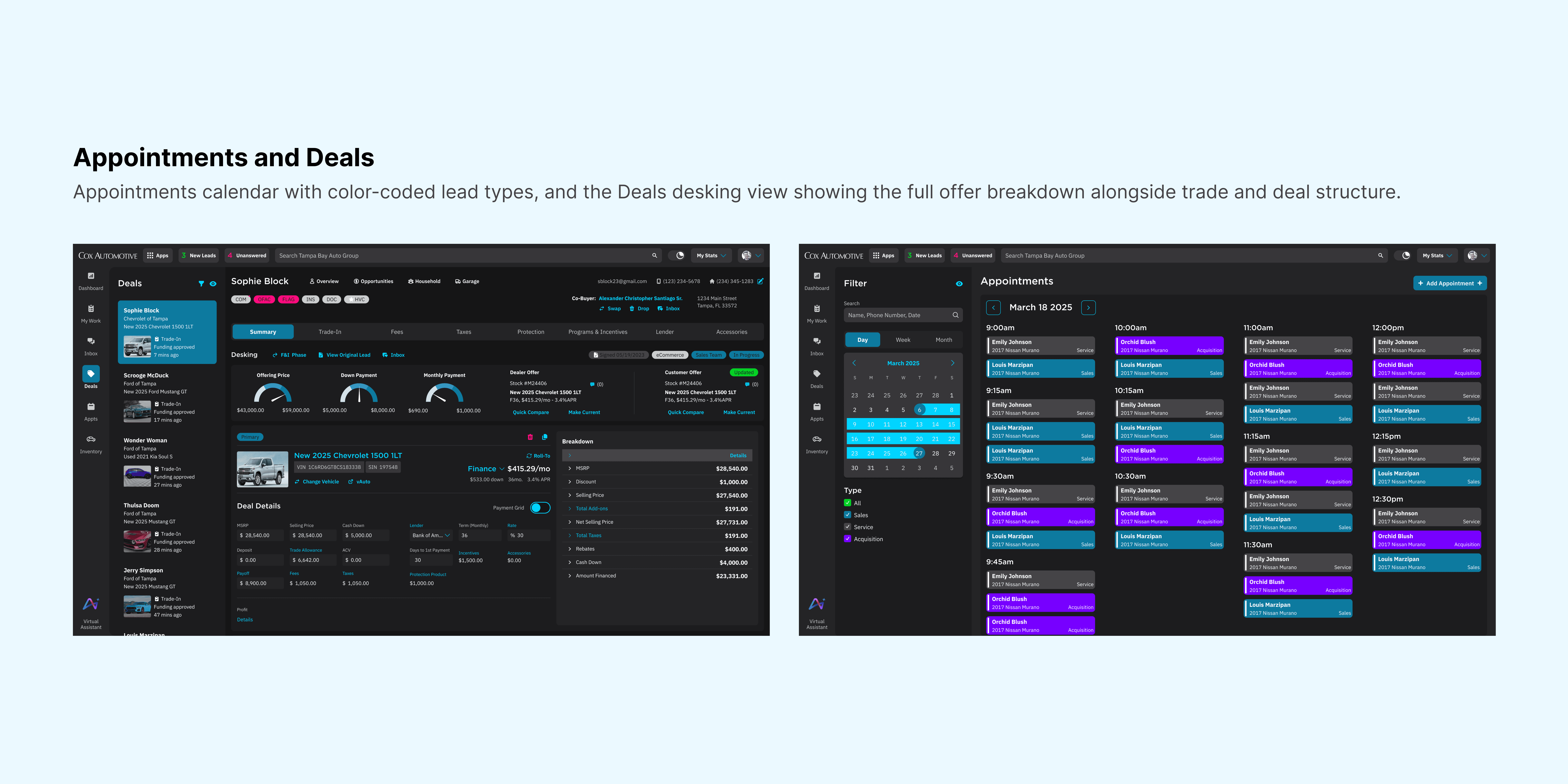
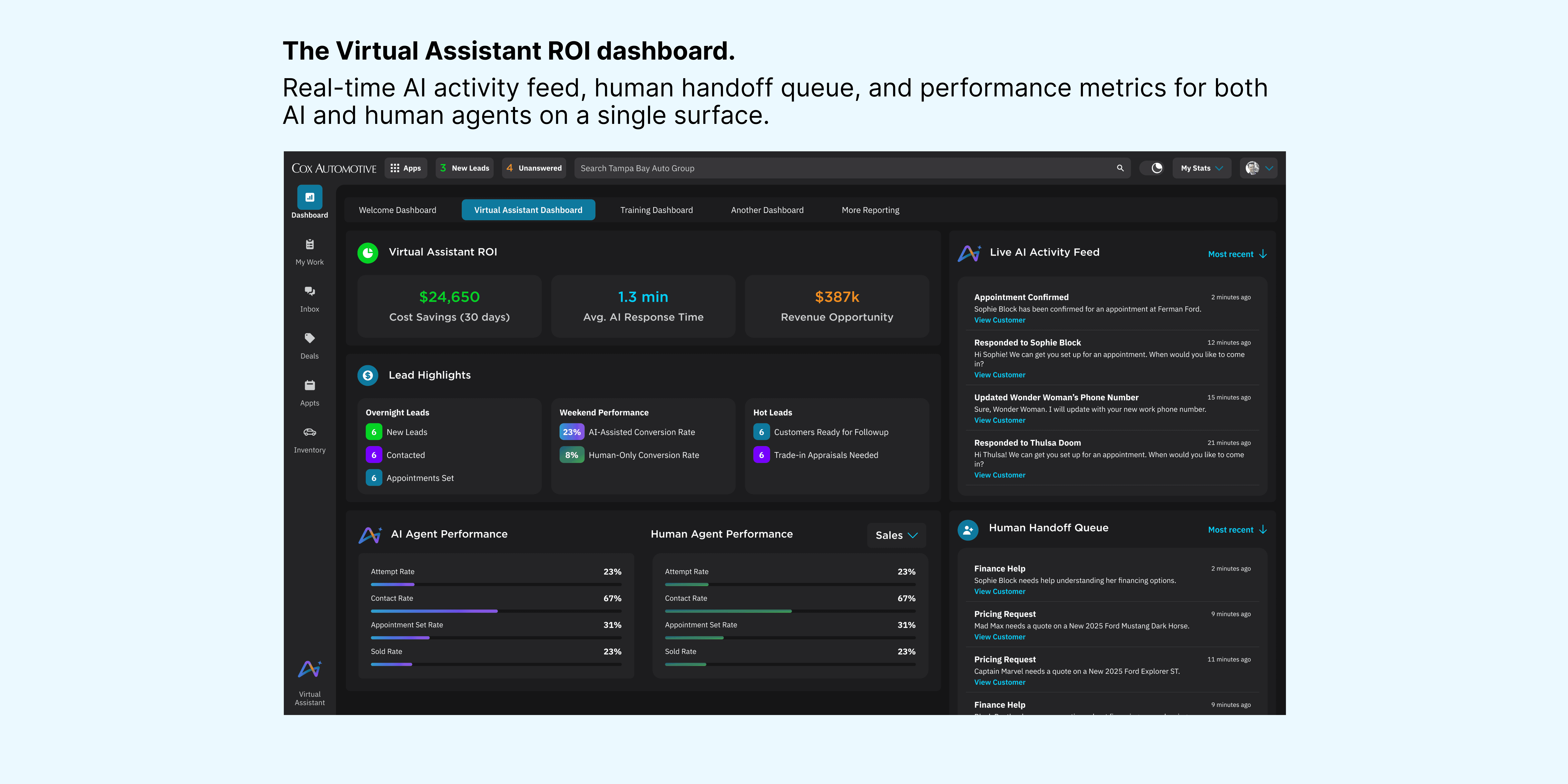
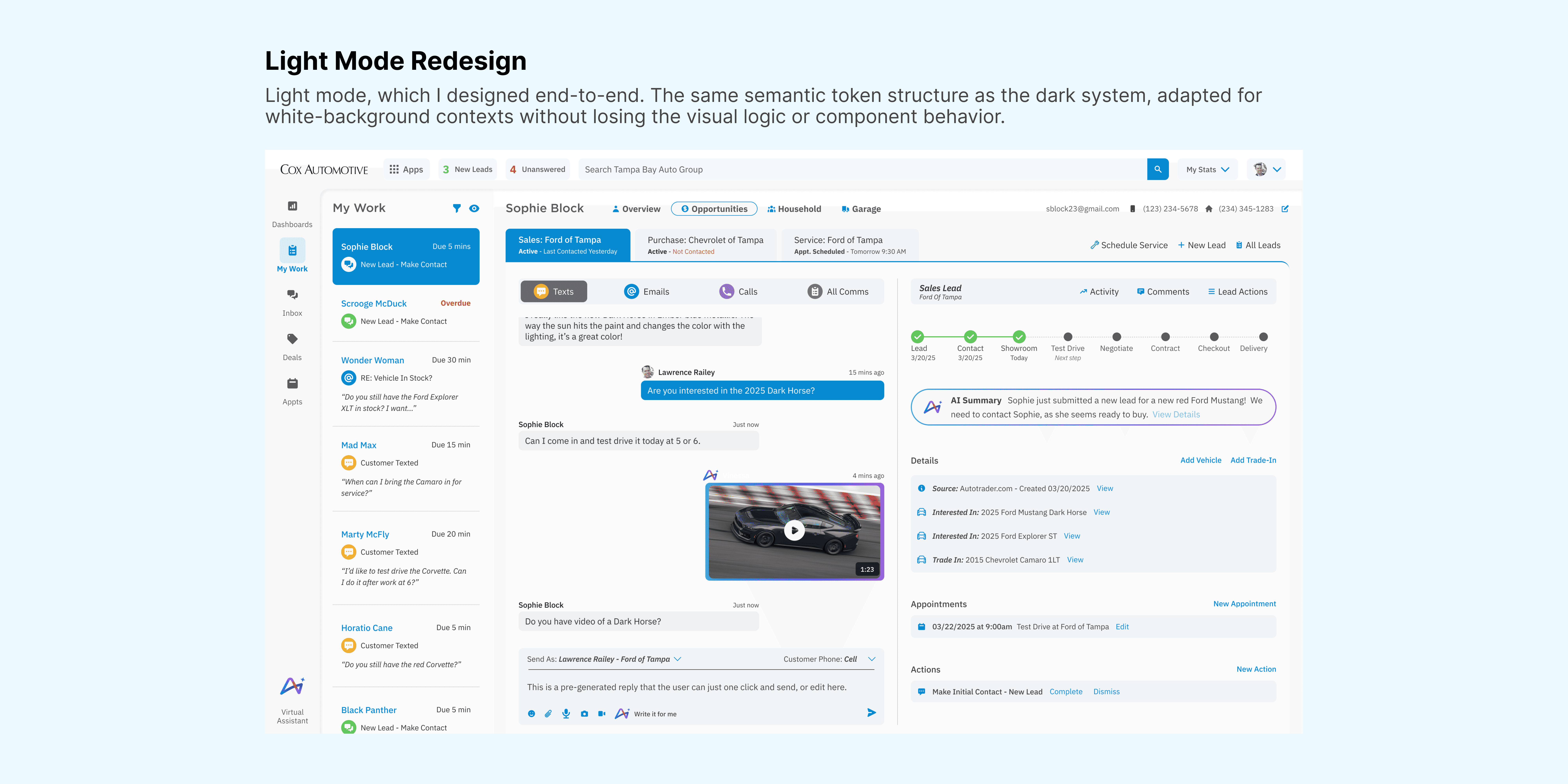
Validated and handed off
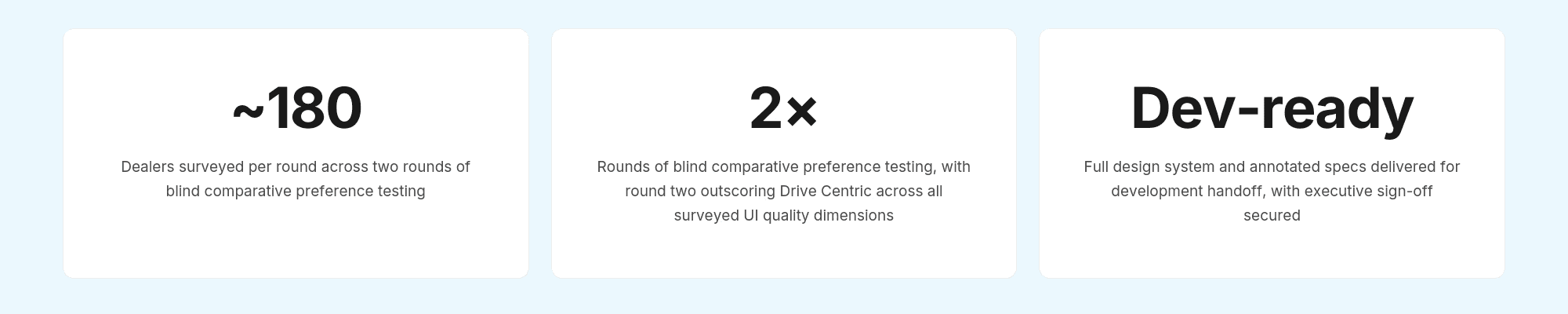
The redesign received executive sign-off from senior leadership and was positioned for development handoff. I was part of a wave of layoffs before the launch, but the project was research-validated and dev-ready at the time of my departure.
What the work demonstrated beyond a visual refresh: a competitive threat taken seriously, a design system built to scale rather than scope limited to the screens in view, and a validation process that removed brand bias from the equation. This project created Cox Automotive's first dark mode design system. We built it from the ground up alongside the design system team.
What I learned
Designing with a real competitor on the table sharpens your decision-making in a way that internal roadmaps don't. Every choice had a reference point. That pressure was clarifying.
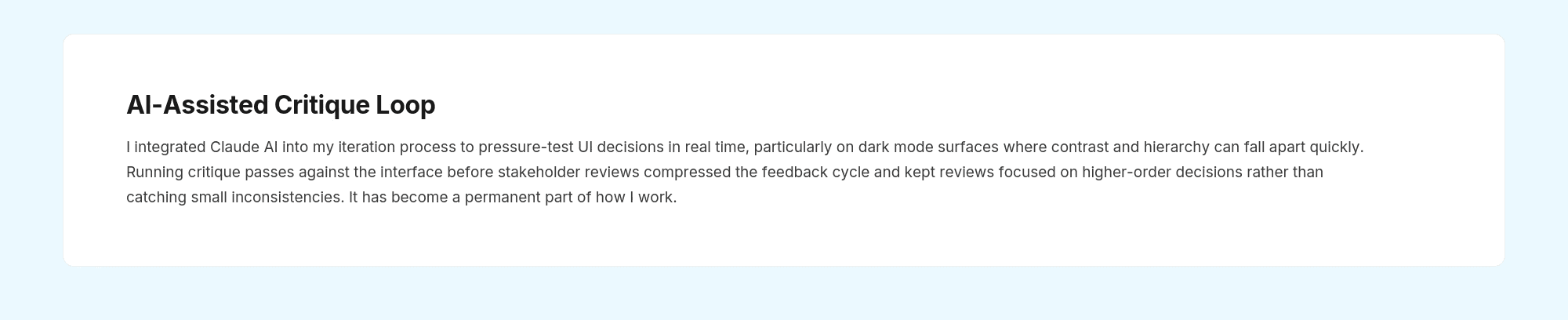
The AI-assisted critique loop was the most effective process change I made on this project. Running contrast, hierarchy, and layout decisions against the interface before stakeholder reviews meant the reviews were about strategy, not inconsistencies. That approach is now part of how I work on every project.